"Urine-powered cars, homes and personal electronic devices could be available in six months with new technology developed by scientists from Ohio University.
Using a nickel-based electrode, the scientists can create large amounts of cheap hydrogen from urine that could be burned or used in fuel cells. "One cow can provide enough energy to supply hot water for 19 houses," said Gerardine Botte, a professor at Ohio University developing the technology. "Soldiers in the field could carry their own fuel."
Forget gas, batteries — pee is new power source
Showing posts with label farm power. Show all posts
Showing posts with label farm power. Show all posts
July 28, 2009

May 3, 2009
stirling steam engine on small solar collector
Engines available here
and here is a great link to a collection of blueprints if you want to build your own steam engine
April 26, 2009
solar concentration and steam power
photo
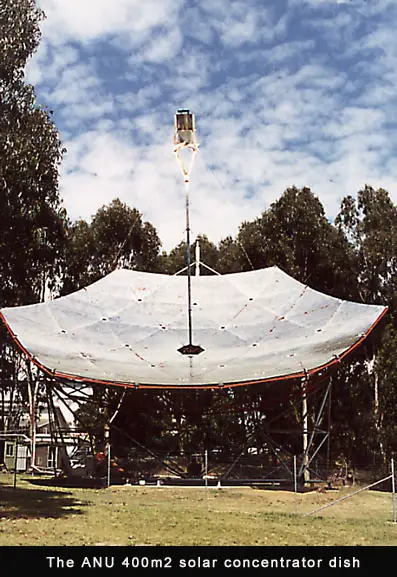
The Annapolis valley has been having its annual spring clean up where all manner of junk, of one person's order, gets set to the curb for the big brown trucks. Good timing, because as the work becomes full-on I like to day dream about something to build. Sometimes it gets built, and sometimes it is just very pleasurable to be weeding or shoveling and daydream about, in this case, a solar concentrator dish for steam power.
On the curb I found a dissecting microscope that works and a 4 foot satellite dish. A pal down the road, who scours the valley for treasures at the roads side has his eyes open for an antique (30s/4os) compressor because maybe we might make a steam engine out of it..oh and mirror bits. This is the type of place where you might find that kind of thing lying about as one person's junk.
I am going to set broken mirrors in the parabola that she is (maybe first I'll pop a microphone up in it to listen closer to the peepers (frogs) and birds) but it is a little steam engine that I really want to mount.
This great guy uses his to boil his spaghetti, but imagine if the pot were a pressure canner - it would make an interesting garden ornament, particularly if the steam powered a little engine that wound round a track, or spun a propellor on a wee hummingbird.
Or, ok, a practical thing then...perhaps an alternator would fit some how.
Perhaps the massive gold bowls found from Mayan antiquity were used to collect this electromagnetic power, perhaps that was what was on the spot we've assumed are cap stones on the ancient pyramids?
What I am sure of though is that sun to steam to electricity sounds good to me.
April 14, 2009
Anne and Eric Nordell

Photo from New Rodale Institiute : A truley regenerative farming
These people are my hereos:
"Beech Grove Farm is located on 90 acres in north-central Pennsylvania. The Nordells
operate their diversifi ed vegetable farm using their own hands and four draft
horses. They grow the bulk of their cash crops on a well drained six-acre fi eld that
is divided into a dozen half-acre lots. At any one time in the growing season,
half the cropping area is in cash crops and the other half is fallow. A field of springplanted crops next has a year of fallow,
then summer-planted crops. On the fallow sections, they use two cover crops and
a bare fallow to control weeds. With this rotation sequence, they build their soil and eliminate weeds."
From Attra:
A Whole Farm Approach to Managing Weeds in Onions,
Eric and Anne Nordell’s Beech Grove Farm, Pennsylvania:
April 13, 2009
A Farm for the Future
This is a pretty amazing film. I found it at the Post Carbon Institute
"Filmmaker Rebecca Hosking investigates how to transform her family's farm in Devon (U.K.) into a low-energy farm for the future. This video features excerpts from an interview with Post Carbon Senior Fellow Richard Heinberg".
One of Heinberg's quotes " Our energy dependence is equivalent to 22 billion slaves".
I`ll be looking forward to a part 2 of this in a few years time: I sure hope there is one, and that feeding people is one of the top 3 achievements: carbon neutrality and ecological health, being the other 2.
Permaculture gardens and tree farms are lovely and if one is lucky enough to have the land to feed yourself, is the best way to do that ecologically - But they can't feed the biilions on the planet, unless complete global redistribution of land, infastructure costs and somehow skill aquision is transfered to 10 - 50% of the population. I don`t see that happening before the real food-fuel crises. Permaculture takes long, laborious, minimal return, years of work and money (trees/shrubs are not cheap) to get established. While many incredible examples of permaculture design thrive, very few can feed more than a few families. Harvesting is particulary laborious. Most people could not afford to farm like this.
I believe plowing has a place in food production and but it can be reduced to once in a long while with long rotations, cover crops and diversity, with pastures brought into the rotation with grains and vegetables. This does requires power.
I think its folly to dismiss the horse. I`d suggest finding Eric and Anne Nordell`s excellent series of articles in the Small Farmers Journal on sustainable large market horse gardening. You`ll have to buy the back issues, but you can, and you won`t be disapointed!
As well there are electric tractors, conversions and new ones and I think they deserve far more attention.

On market gardens a biodiesel walk behind tractors may be an option for transition if materials are available for making the fuel locally without competeing for food or land resources (waste grease, for e.g.)
In Canada we have a lot of large beef farms too and the acreage for is vast and the hay making energy intensive, as is the grain production that goes into fattening up the steers at feedlots. I propose the government purchase these large acreages, close to towns and cities across the country and redistribute this land in 5 - 100 acre lots (depending upon the farming proposal) to farming potentates. We`ll need organic agriculture departments not threatened with closure, and mentoring with farmers and, yes, permaculture designers.
you have a 500 acre farm endowed with hedgerows and woodlot, a small scale intensive agriculture could thrive - each independent, yet interconnected. Trade becomes real goods - use of my horses to plow in exchange for grazing on the harvested market garden...or I grow you mangles and you give me the wool. What a lovely world!
But it won;t come to that until....it comes to that (when there are no more desk jobs, or waitress or call centers. We`d have to give people land, say title is earned after proving production of so much food with said amount of carbon debt.
That is what I think Rebecca Hosking should do to transform her family's farm in Devon into a low-energy farm for the future. Bring in the community of people it would take to do just that.
"Filmmaker Rebecca Hosking investigates how to transform her family's farm in Devon (U.K.) into a low-energy farm for the future. This video features excerpts from an interview with Post Carbon Senior Fellow Richard Heinberg".
One of Heinberg's quotes " Our energy dependence is equivalent to 22 billion slaves".
I`ll be looking forward to a part 2 of this in a few years time: I sure hope there is one, and that feeding people is one of the top 3 achievements: carbon neutrality and ecological health, being the other 2.
Permaculture gardens and tree farms are lovely and if one is lucky enough to have the land to feed yourself, is the best way to do that ecologically - But they can't feed the biilions on the planet, unless complete global redistribution of land, infastructure costs and somehow skill aquision is transfered to 10 - 50% of the population. I don`t see that happening before the real food-fuel crises. Permaculture takes long, laborious, minimal return, years of work and money (trees/shrubs are not cheap) to get established. While many incredible examples of permaculture design thrive, very few can feed more than a few families. Harvesting is particulary laborious. Most people could not afford to farm like this.
I believe plowing has a place in food production and but it can be reduced to once in a long while with long rotations, cover crops and diversity, with pastures brought into the rotation with grains and vegetables. This does requires power.
I think its folly to dismiss the horse. I`d suggest finding Eric and Anne Nordell`s excellent series of articles in the Small Farmers Journal on sustainable large market horse gardening. You`ll have to buy the back issues, but you can, and you won`t be disapointed!
As well there are electric tractors, conversions and new ones and I think they deserve far more attention.

On market gardens a biodiesel walk behind tractors may be an option for transition if materials are available for making the fuel locally without competeing for food or land resources (waste grease, for e.g.)
In Canada we have a lot of large beef farms too and the acreage for is vast and the hay making energy intensive, as is the grain production that goes into fattening up the steers at feedlots. I propose the government purchase these large acreages, close to towns and cities across the country and redistribute this land in 5 - 100 acre lots (depending upon the farming proposal) to farming potentates. We`ll need organic agriculture departments not threatened with closure, and mentoring with farmers and, yes, permaculture designers.
you have a 500 acre farm endowed with hedgerows and woodlot, a small scale intensive agriculture could thrive - each independent, yet interconnected. Trade becomes real goods - use of my horses to plow in exchange for grazing on the harvested market garden...or I grow you mangles and you give me the wool. What a lovely world!
But it won;t come to that until....it comes to that (when there are no more desk jobs, or waitress or call centers. We`d have to give people land, say title is earned after proving production of so much food with said amount of carbon debt.
That is what I think Rebecca Hosking should do to transform her family's farm in Devon into a low-energy farm for the future. Bring in the community of people it would take to do just that.
April 12, 2009
Post Carbon farming
Transition away from oil is a critical step that requires a plan ...now.
Food and Farming Transition; Toward a Post Carbon Food System
The Post Carbon Institute report with cooperation from the Soil Association of Britain.
Read the PDF report
What do they propose we transition to for a post carbon food system?
Animal and human power for vegetables, nuts and dairy
rotational crops for fertility and pest control
pastures meat
local non gmo seed developed for local crops
hedgerow/woodlots and biochar
on farm biofuel production for large (grain) operations
wind solar and other alternatives
Sounds like a fabulous list. How do we make it happen?
How do we make sure incentive monies are not sidetracked toward industrial bichar and ethanol production?
Will there be the workers willing to engage in the manual labour that the transition will necessitate?
How will the current drivers of modern agriculture (monsanto, cargill, syngenta, et al) fit in to the picture? Do they need to be transitioned themselves by the transference of authority - perhaps legislation to return governance of corporations to its shareholders is in order.
Urgency is needed to honour those farmers who have preserved many of these excellent traditional carbon minimal practices...we are getting old and have been treated badly. Ridicule and repudiation and ignorance by the FDA, Ag Canada, corporate bodies and large export farm organizations is more like it. But ask eaters what they want in their kitchens and let them decide!
Powerful corporate interests will transition only through real changes in participatory democracy.
Food and Farming Transition; Toward a Post Carbon Food System
The Post Carbon Institute report with cooperation from the Soil Association of Britain.
Read the PDF report
What do they propose we transition to for a post carbon food system?
Animal and human power for vegetables, nuts and dairy
rotational crops for fertility and pest control
pastures meat
local non gmo seed developed for local crops
hedgerow/woodlots and biochar
on farm biofuel production for large (grain) operations
wind solar and other alternatives
Sounds like a fabulous list. How do we make it happen?
How do we make sure incentive monies are not sidetracked toward industrial bichar and ethanol production?
Will there be the workers willing to engage in the manual labour that the transition will necessitate?
How will the current drivers of modern agriculture (monsanto, cargill, syngenta, et al) fit in to the picture? Do they need to be transitioned themselves by the transference of authority - perhaps legislation to return governance of corporations to its shareholders is in order.
Urgency is needed to honour those farmers who have preserved many of these excellent traditional carbon minimal practices...we are getting old and have been treated badly. Ridicule and repudiation and ignorance by the FDA, Ag Canada, corporate bodies and large export farm organizations is more like it. But ask eaters what they want in their kitchens and let them decide!
Powerful corporate interests will transition only through real changes in participatory democracy.
February 14, 2009
The BCS is a great machine
I had a wonderful blue Italian walk behind tractor at my old farm that tilled, pulled a wagon, a lister plow and a sickle bar mower. A grand machine that powers itself, adjustable handles so the PTO can be at front and the machine in reverse, wheels adjusted. I even used it to pull logs out of the brush.
They make diesel BCS as well, its a machine I am currently looking for, because I can make biodiesel from waste grease. I'll post about that soon.
Earth Tools has a number of implements for the BCS and sells several models.
And a video of a combine in use on a walk behind tractor. BCS sells a reaper binder for harvesting grain in Europe and Asia. Not sure if this is available in North America.
Here is another Italian walk behind tractor with implements for the small farm
They make diesel BCS as well, its a machine I am currently looking for, because I can make biodiesel from waste grease. I'll post about that soon.
Earth Tools has a number of implements for the BCS and sells several models.
And a video of a combine in use on a walk behind tractor. BCS sells a reaper binder for harvesting grain in Europe and Asia. Not sure if this is available in North America.
Here is another Italian walk behind tractor with implements for the small farm
January 12, 2009
electric tractor

I posted about an electric conversion of an Allis Chalmers G a while back and stumbled upon some modern electric tractors. Yes that is a solar panel mounted like a canopy. Check out the video on the company's website. They have a model that runs on tracks with 3 point hitch and PTO...and can be set up with a loader or an excavator.
Here is another site that discusses some older garden tractors and if you're interested in smaller electric equipment (tillers, chainsaws) this site has a good list of stuff.
January 3, 2009
human and self powered pumps

follow this link for an excellent collection of tradition pumps, including the self powering hydraulic ram.

A (not as pretty) modern version that looks pretty amazing. Its the "the Super MoneyMaker Pump—yes, that's the real name—sucks up water from sources as many as 30 feet below the ground, can spray it up to 40 feet high, and can even push it through 1,000 feet of hose to cover a larger section of land. In all, the pump can irrigate two acres of land, and costs only around $100". here
December 9, 2008
A few multi-purpose cows: milk, meat and draught


From top clockwise: canadianne, kärntner blondvieh,
aure et saint-girons, lourdais, and milking devon.
Diversity in cattle has diminished at a rapid rate over the past 100 years. Many breeds that fit in well on a small self-sufficient farm are now classified as rare breeds, or have disappeared altogether. Some like the pineywoods and dexter are making a comeback. Often these breeds were tough and bred for local conditions as well as utility. The uniformity of the super breeds may be well suited for industrial farming milieus, but like plant biodiversity, sustainable farms would do well to research and breed livestock that represent some of the oldest and most robust genes for ecological farming.
November 24, 2008
Not Elephant Gas
I named my cow Cheeky Butt in part to pay homage to her fabulous but under utilized resource (she is also rather sly). I have always made compost from manure for the vegetable fields and taken harrows out to spread the paddies into the grass. But I really want to use digested slurry for compost one day after I've utilize the gas. Its one of my life goals - to can and bake for (ample) farm hands, in a summer kitchen, the outside type, where huge pots can up sauces, pickles and such. There has been much buzz about biofuel from methane over the years...but not much action in the our part of the world. 
CBC has a news clip on their website of the Toronto's Zoo plan to turn their captive's manure into biofuel. They mention that the technology is "mature" particularly in Europe. Many farms and villages in India and China and elsewhere have used methane gas for centuries, from their own or their animal`s manure to cook. It is a very simple and cheap technology profile. Larger distilleries are now emerging in India and other countries with European technologies that involve specialized anaerobic digestion that may involve transgenic bacteria as perhaps the corporate industrial solution to reep profits from a grass roots technology. We have so much to learn from small scale Asian and Indigenous technologies. Scale and context have to be considered. I think Elephants belong in Sri Lanka, not Toronto, and to justify their captivity with a "green`project" is kind of like using GE Canola grown from vanishing farmland to burn in biodiesel vehicles driven around a city. I justify keeping Cheeky Butt and Aurora Curls because I believe in a good compost, but I`d feel better about our symmetry after designing a household scale digestor that works with the anaerobic bacteria that live right here in our soil.


CBC has a news clip on their website of the Toronto's Zoo plan to turn their captive's manure into biofuel. They mention that the technology is "mature" particularly in Europe. Many farms and villages in India and China and elsewhere have used methane gas for centuries, from their own or their animal`s manure to cook. It is a very simple and cheap technology profile. Larger distilleries are now emerging in India and other countries with European technologies that involve specialized anaerobic digestion that may involve transgenic bacteria as perhaps the corporate industrial solution to reep profits from a grass roots technology. We have so much to learn from small scale Asian and Indigenous technologies. Scale and context have to be considered. I think Elephants belong in Sri Lanka, not Toronto, and to justify their captivity with a "green`project" is kind of like using GE Canola grown from vanishing farmland to burn in biodiesel vehicles driven around a city. I justify keeping Cheeky Butt and Aurora Curls because I believe in a good compost, but I`d feel better about our symmetry after designing a household scale digestor that works with the anaerobic bacteria that live right here in our soil.

Historic Agricultural Literature
I collect a few things like stones, tools, puppets and agricultural books. My favorites are those published before the "Green Revolution" when fertilizer meant manure or soiling crops and pest control were chickens and field rotations. Some of my favorites:
Farmers of Forty Centuries; Permanent Agriculture in China, Korea and Japan; FH King 1911 and the The Culture of Vegetables and Flowers. Sutton, 1913.
The Small Farmers's Journal often lists booksellers of Farm Literature and has reprinted some treasures within its own pages.
I'll post a list of some great old farming books on the sidebar soon. In the meanwhile, and its not as satisfying as having those beautiful old pages sliding through your fingers, here are a couple of sites online that have great digitalized collections:
http://chla.library.cornell.edu
"The Core Historical Literature of Agriculture (CHLA) is a core electronic collection of agricultural texts published between the early nineteenth century and the middle to late twentieth century. Full-text materials cover agricultural economics, agricultural engineering, animal science, crops and their protection, food science,forestry, human nutrition, rural sociology, and soil science".
http://soilandhealth.org
Free digitalized library on line with a collection of books on holistic agriculture, health and self-sufficient homestead living.
http://journeytoforever.org/farm_library.html
An excellent online collection of classic small farm books
Farmers of Forty Centuries; Permanent Agriculture in China, Korea and Japan; FH King 1911 and the The Culture of Vegetables and Flowers. Sutton, 1913.
The Small Farmers's Journal often lists booksellers of Farm Literature and has reprinted some treasures within its own pages.
I'll post a list of some great old farming books on the sidebar soon. In the meanwhile, and its not as satisfying as having those beautiful old pages sliding through your fingers, here are a couple of sites online that have great digitalized collections:
http://chla.library.cornell.edu
"The Core Historical Literature of Agriculture (CHLA) is a core electronic collection of agricultural texts published between the early nineteenth century and the middle to late twentieth century. Full-text materials cover agricultural economics, agricultural engineering, animal science, crops and their protection, food science,forestry, human nutrition, rural sociology, and soil science".
http://soilandhealth.org
Free digitalized library on line with a collection of books on holistic agriculture, health and self-sufficient homestead living.
http://journeytoforever.org/farm_library.html
An excellent online collection of classic small farm books
November 20, 2008
Electric G : the silence is luscious

Last night on CBC`s As it Happens, Carolyn who operates Luscious Garage in San Fransisco was interviewed about her brisk business in converting hybrids to electric vehicles. The story was a clever juxtaposition to the big story of the US Congress `lame duck`session to dole out alms to the Corporate Auto Dinosaurs (who flew to Washington in private jets). And it amazes me daily how few luscious mechanics we have. My suggestion for stimulating the economy in one of many billion small, local, green ways, is to train folks to convert old tractors to electric. These old beauties are incredibly useful in vegetables as the seeder or weeding implements fits under the belly, or in front of the tractor, and the engine is in the rear, making precision and visibility quite lovely. Check out how to make the conversion, if you are lucky enough to have an old Allis Chalmers G sitting in your back field.
Subscribe to:
Posts (Atom)


